The full process
From drawing
to dispatch.
Ten stages, each with its own equipment, expertise, and quality checks. This is the full version — what each step actually involves, what we use to do it, and what we test for.
Design & Simulation
Engineering starts before a single grain of sand is moulded.
We begin with your drawings, 3D models, or sample castings. Our engineers review the geometry for castability — wall thickness, feed paths, shrinkage allowances, draft, and machining stock.
Every job runs through AutoCAST simulation. We model the full pour and solidification cycle to predict hot spots, shrinkage cavities, gas porosity, and mis-runs before any metal is melted. The output is an optimised gating + risering design that minimises defects and material waste.
If a change to the casting design will improve quality or yield, we'll flag it. If it won't, we cast what you sent us.
- AutoCAST solidification & gating simulation
- CAD review (STEP, IGES, DWG, PDF)
- Castability review
- Simulation defect prediction
Pattern Preparation
Tight tolerances start with the right pattern.
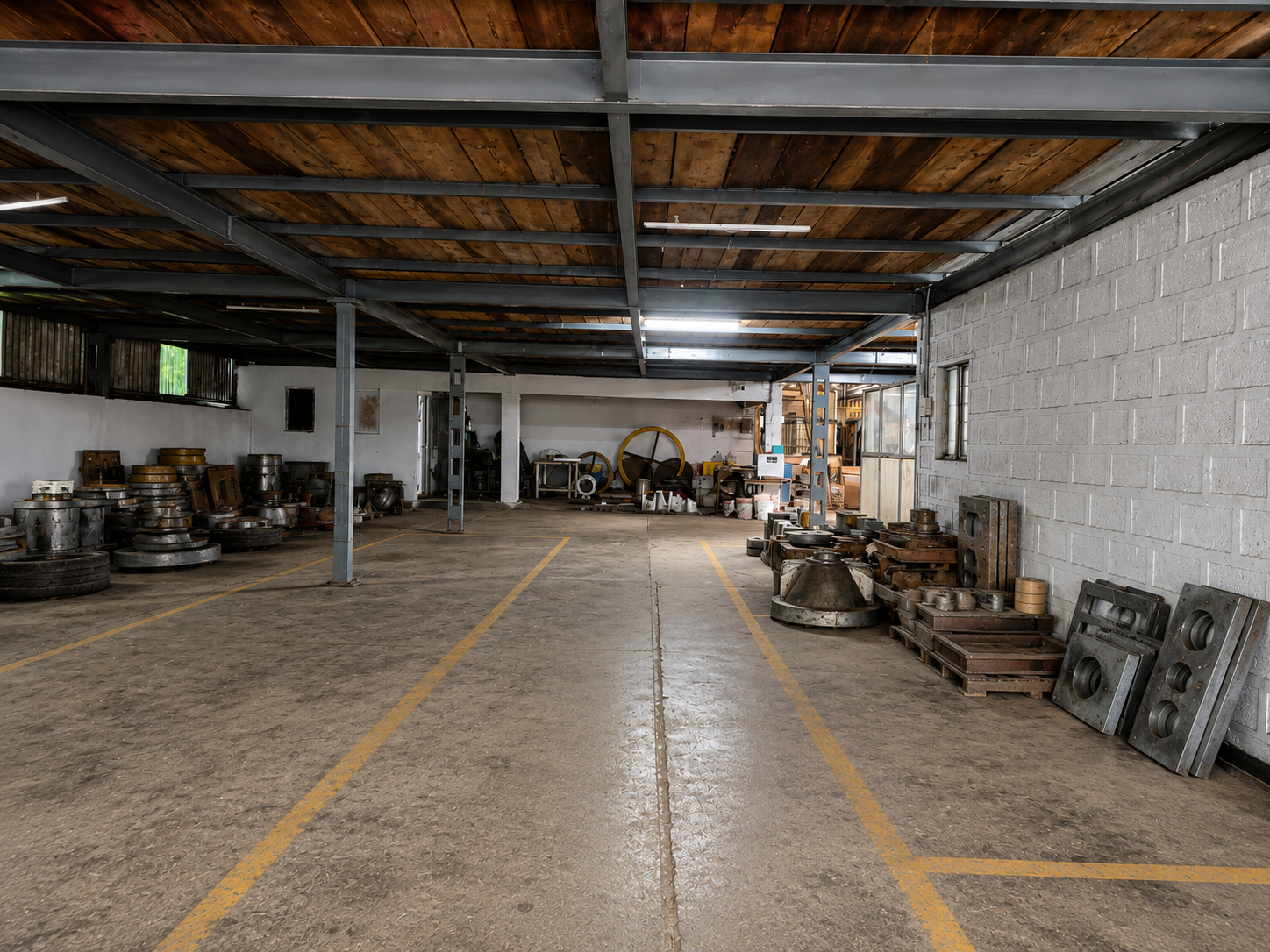
We work with a network of established external pattern makers — chosen for their dimensional accuracy and consistency. Customer-supplied patterns are equally welcome.
Every pattern that enters the plant — sourced or supplied — is dimensionally validated against the drawing before moulding begins. Pattern integrity, draft, and surface condition are checked. If anything is off, we resolve it before sand goes in the box.
- Trusted external pattern partners
- Customer-supplied pattern handling
- Pattern dimensional inspection
- Surface and draft check
Moulding
Consistent moulds, crisp dimensional fidelity.
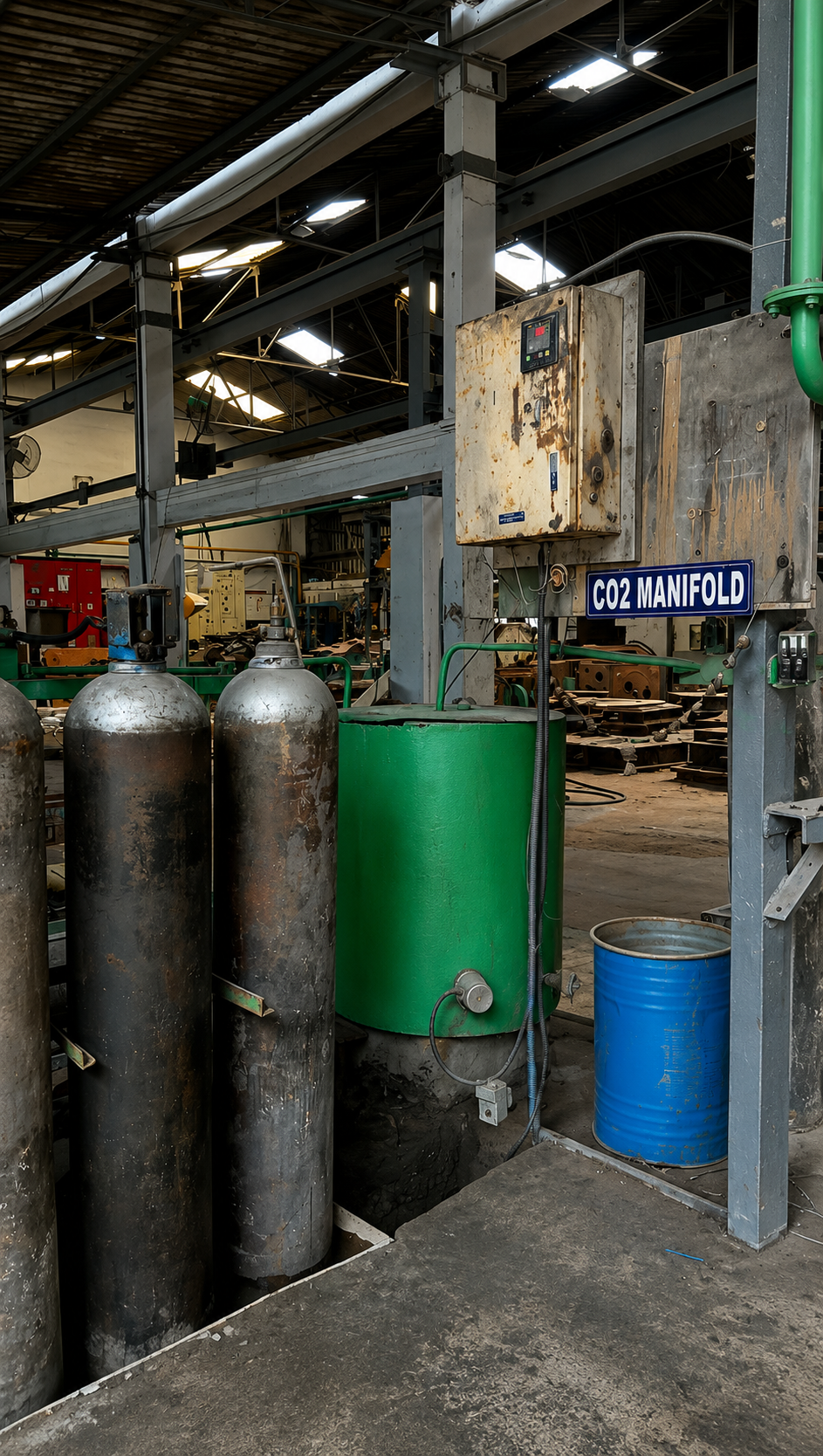
We run a CO₂ moulding line using sodium-silicate-bonded sand. The CO₂ gas hardens the binder, producing rigid, dimensionally stable moulds with excellent surface finish — well suited to the steel grades we cast.
Spent sand from previous heats doesn't go to landfill. Our 100 MT/day sand reclamation system runs a closed-loop reuse cycle, recovering the vast majority of sand for the next run. Fewer trucks in, fewer trucks out, less environmental impact.
- CO₂ moulding line
- Sand reclamation — 100 MT/day
- Sand testing: permeability, AFS grain size, strength, gas values
- Mould dimensional check before pour
Electric Melting
Two electric induction furnaces. No coke. No combustion.
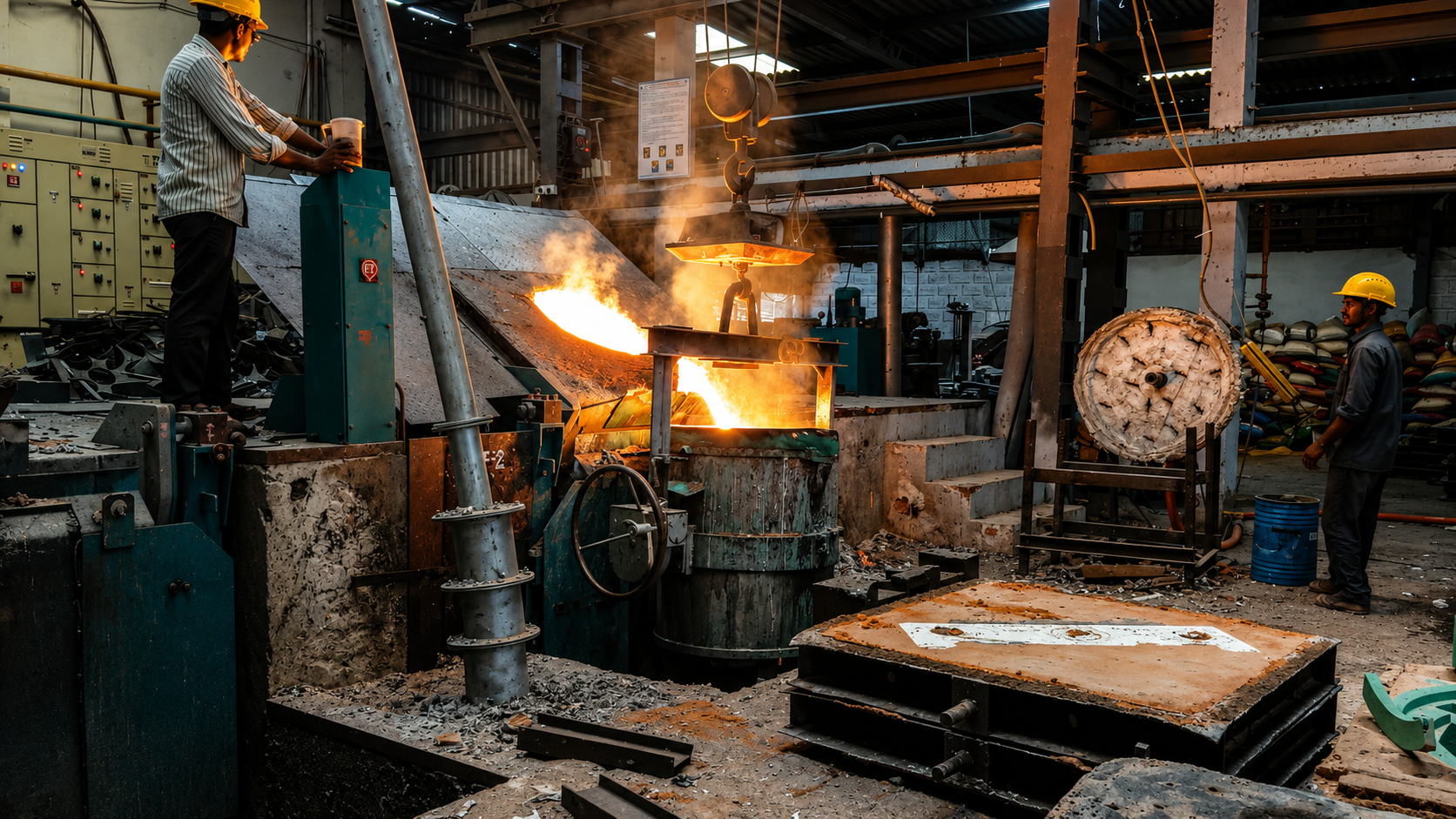
Bana melts steel and iron in two coreless electric induction furnaces, 750–1000 kg each. There's no fossil-fuel combustion at the melt — no coke fire, no furnace smoke, no direct SOₓ / NOₓ / particulate emissions from the heart of the plant.
Spectrometer-verified chemistry on every heat. Temperature monitored throughout. Alloy additions controlled to bring composition into the customer's grade specification before the metal ever leaves the furnace.
- 2× Coreless electric induction furnaces
- 750 – 1000 kg capacity per furnace
- Spectrometer (21 elements) — chemistry verification
- Spectrometer chemistry per heat (21 elements)
- Temperature verification before tap
Pouring
Slag-free transfer, controlled temperature, controlled pour rate.
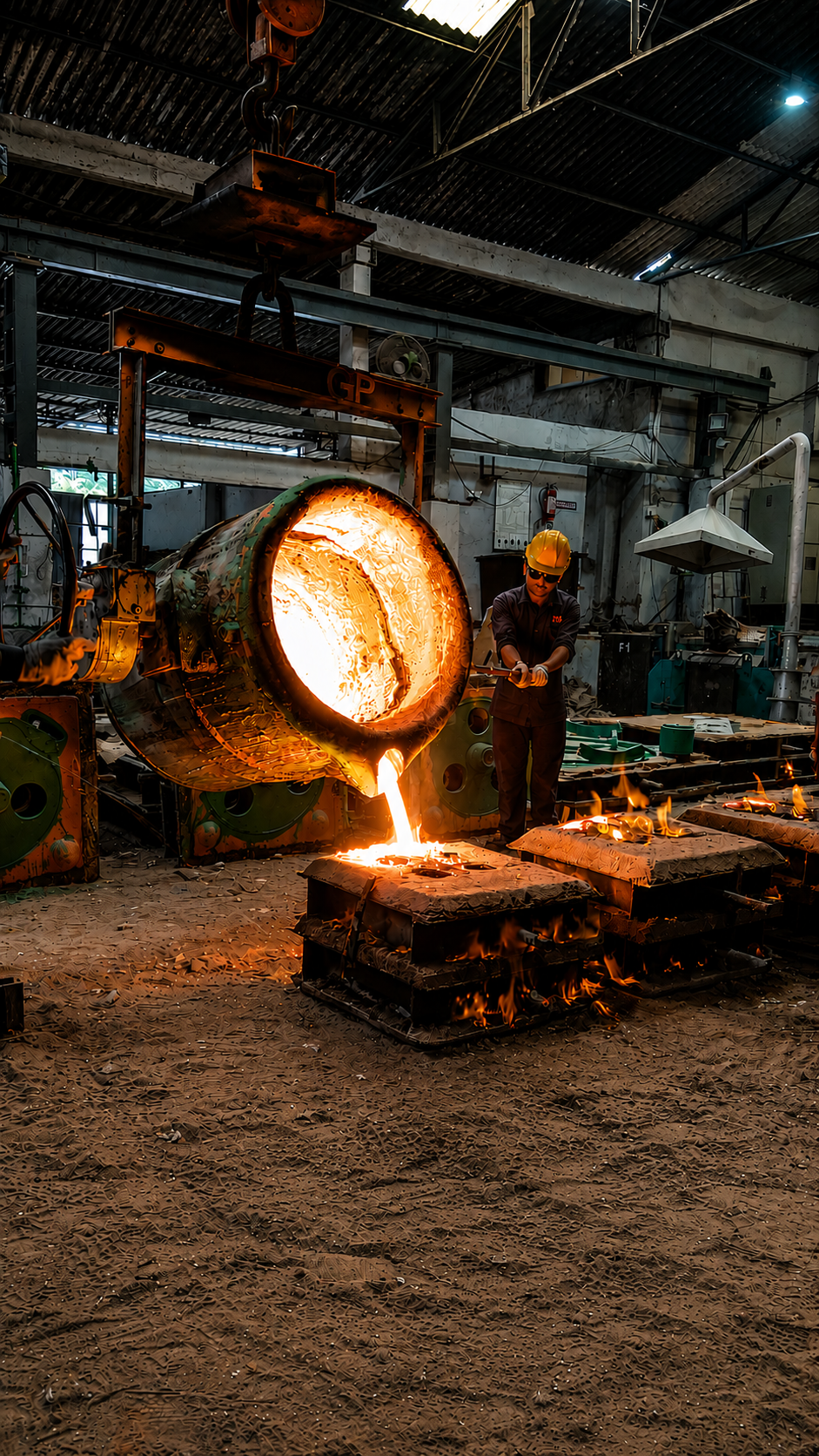
Once the chemistry checks out, the heat is tapped into a ladle. EOT cranes (3 MT & 5 MT capacity) handle the ladle safely to the moulding line. Pouring temperature is measured at the pour point.
Slag is skimmed before pouring. The ladle is poured at a controlled rate to avoid turbulence and air entrainment.
- EOT cranes — 3 MT & 5 MT capacity
- Pouring ladles
- Pour temperature verification
Heat Treatment
Right heat treatment cycle for the right grade.
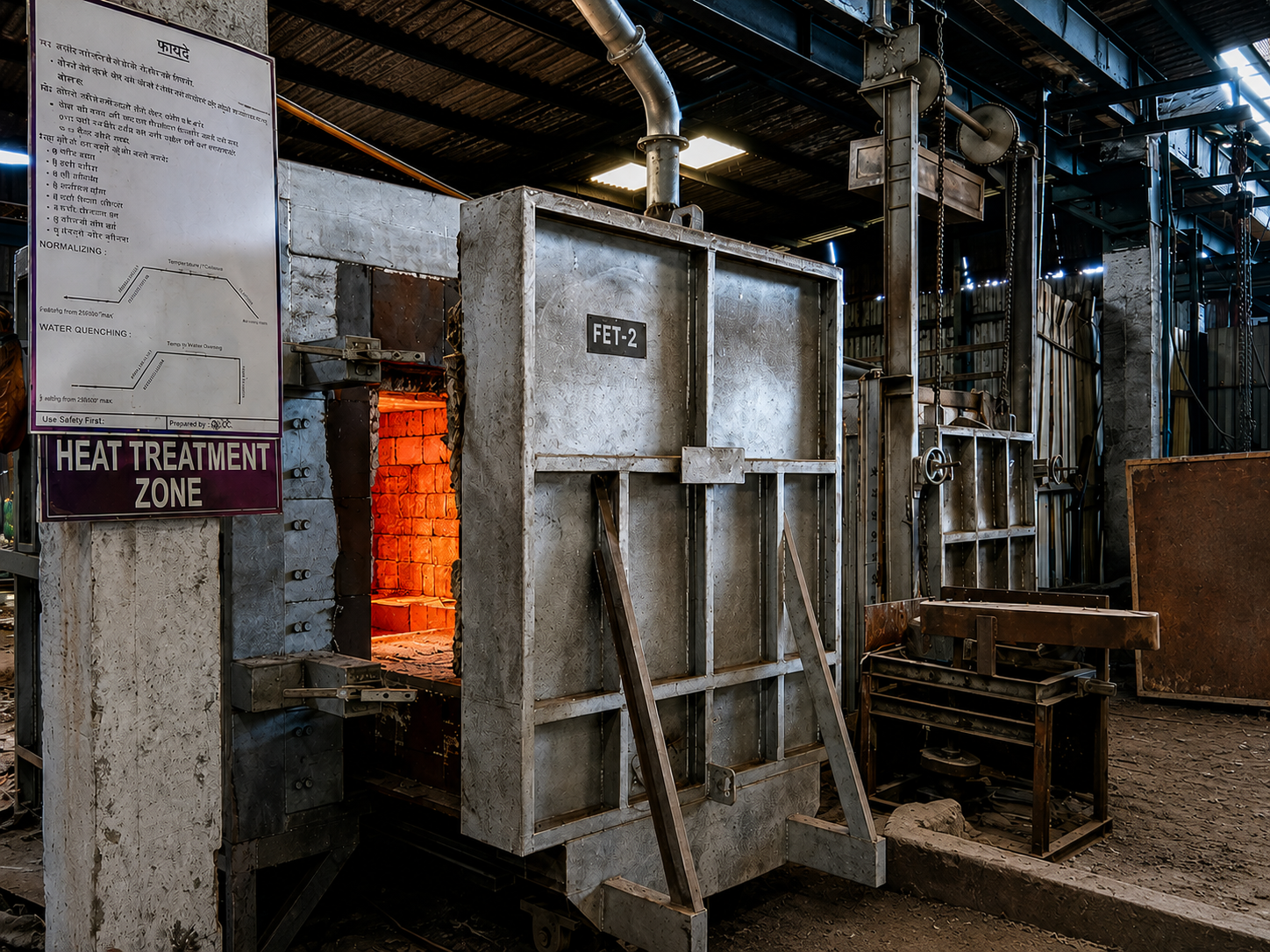
Castings are heat-treated as required by the material grade and customer specification — normalising, annealing, quench & temper, or stress relieving. Both gas-fired and electric heat treatment furnaces are available for the appropriate temperature range and load.
Cycle parameters (temperature, soak time, quench medium where applicable) are logged for each batch. Microstructure is verified post-treatment to confirm the target metallurgical condition has been reached.
- Heat treatment furnaces — gas and electric
- Quenching tanks and air-cooling provisions
- Heat treatment cycle logging
- Post-treatment microstructure verification
Fettling & Deflashing
Removing the casting from its 'skin'.
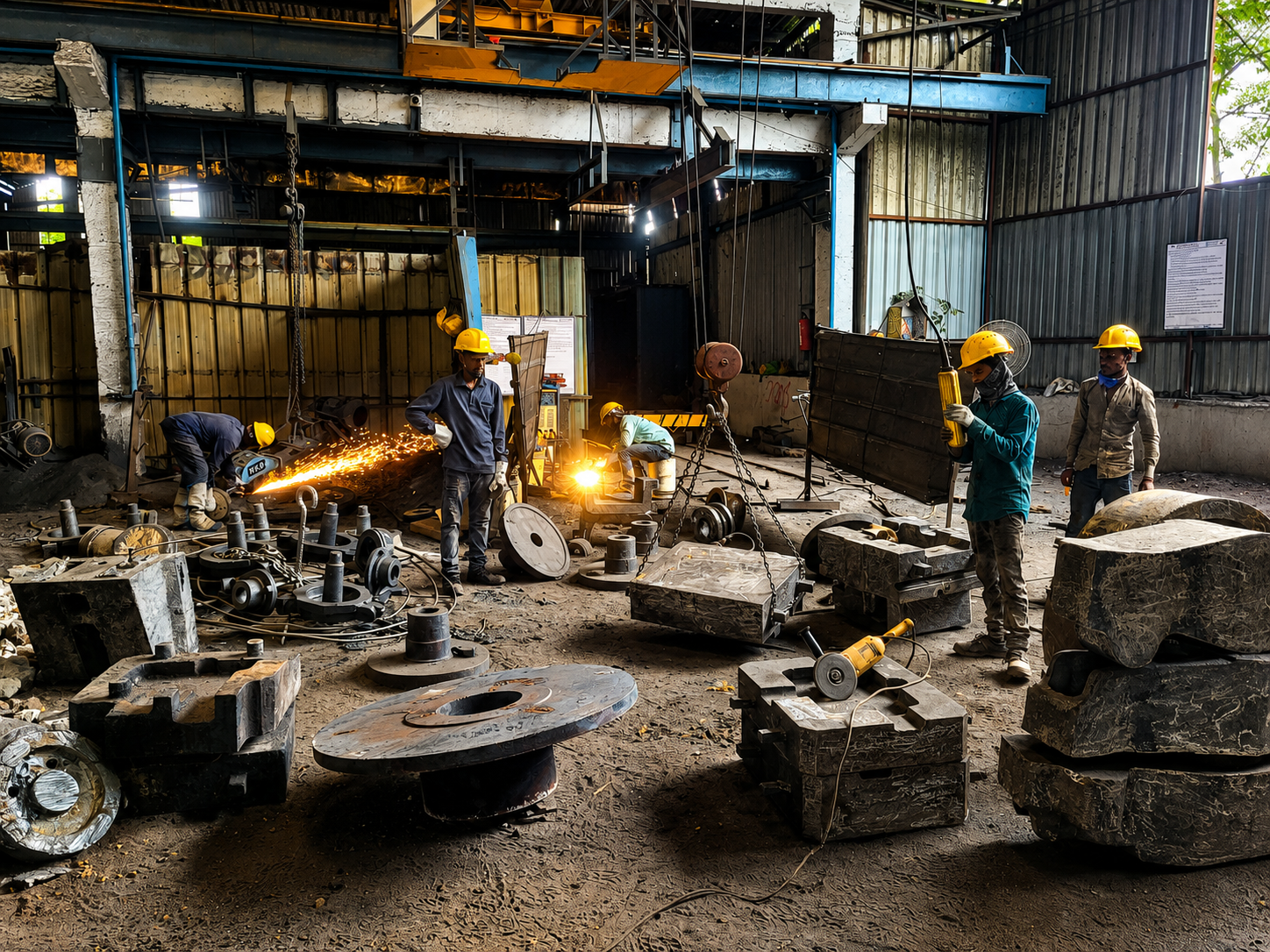
Once cooled, castings are removed from the mould box. The fettling shop handles sand knock-out, riser and gate removal, and deflashing — removing the metal that was part of the gating system but isn't part of the final part.
Surfaces are prepared for the next stage: shot blasting. Sharp edges are knocked back. Anything that shouldn't be on the casting comes off here.
- Fettling shop with cutting and grinding tools
- Visual inspection for surface defects
- Risers/gates removal check
Shot Blasting
In-house surface cleaning to a uniform finish.
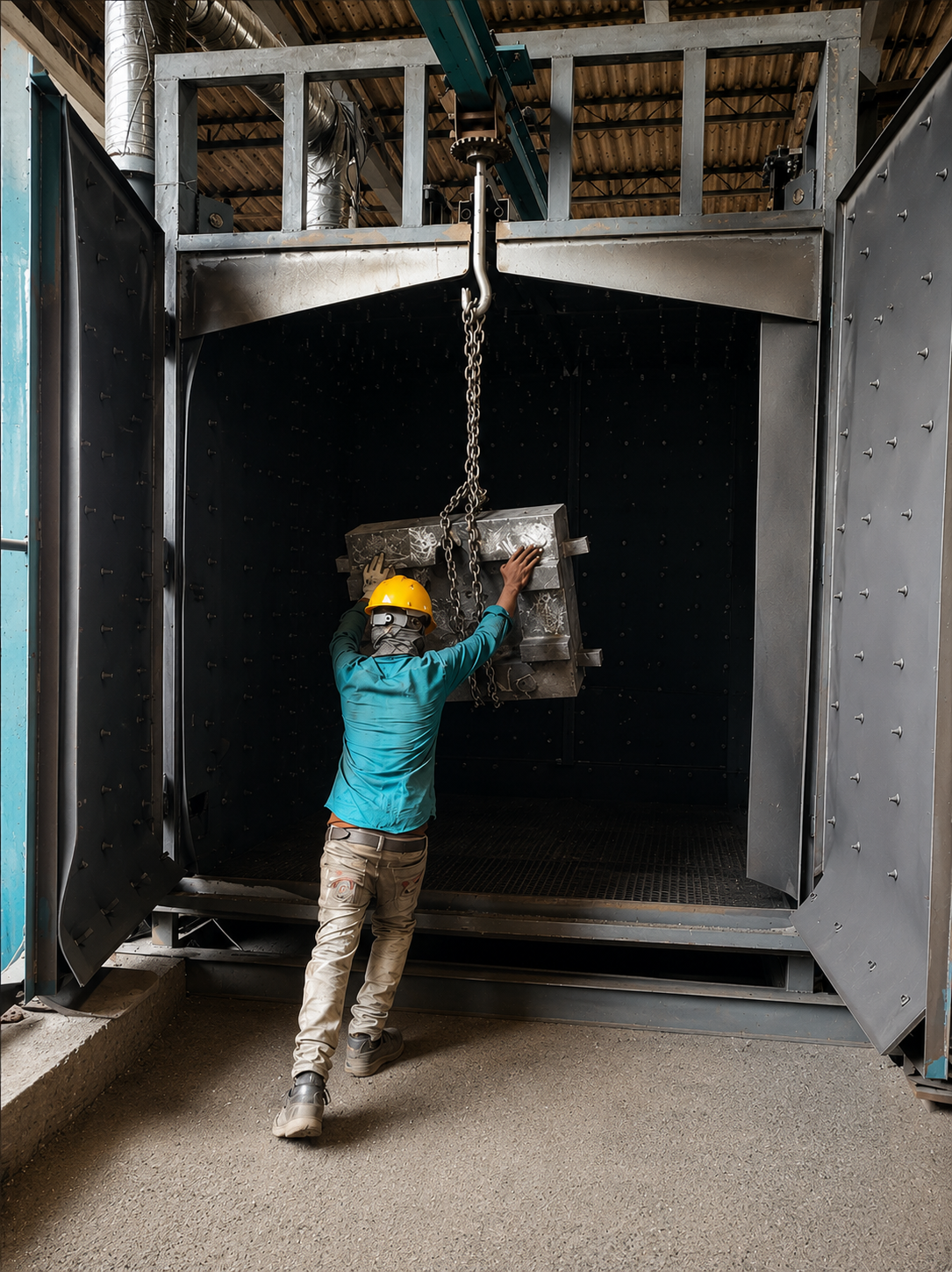
Castings move from fettling to our own shot blasting machine. High-velocity steel shot strips away scale, residual sand, oxide layers, and any remaining surface contamination — leaving a uniform, clean substrate ready for inspection (and downstream machining or coating, if specified).
Owning the shot blasting machine in-house means we control the cycle time, intensity, and shot media used per job — no outsourcing delays, no quality variability from a third party.
- In-house shot blasting machine
- Surface finish check
- Visual inspection for residual scale
Inspection
Every casting. Every test. Documented.
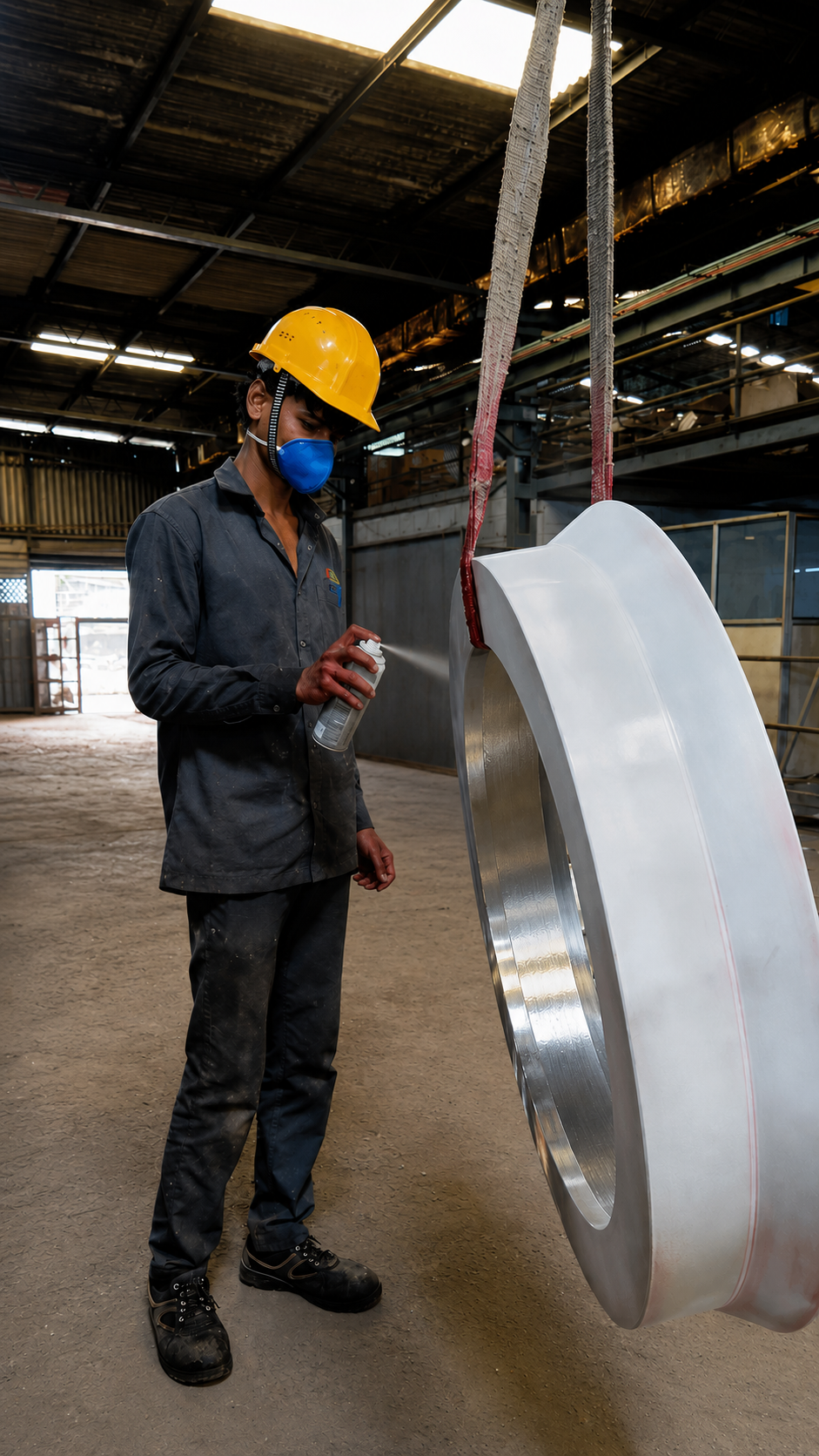
Final inspection is the gate the casting has to pass to leave our plant. Chemistry is verified on the spectrometer (21 elements). Mechanical properties are tested on the UTM — tensile strength, impact, hardness.
Non-destructive testing covers the bases for internal and surface defects: Ultrasonic (UT) for internal voids, Magnetic Particle Inspection (MPI) for surface and near-surface cracks, Dye Penetrant (DP) for surface defects, Radiographic Testing (RT) for internal porosity and inclusions.
Where the specification calls for it, microstructure is examined on a dedicated metallurgical microscope.
Dimensional inspection per the drawing. Reports compiled. Any deviation is flagged before dispatch — the part does not ship until it's right.
- Spectrometer — 21 elements
- UTM — tensile, impact, hardness
- Ultrasonic (UT), MPI, DP, Radiographic (RT)
- Metallurgical microscope — microstructure analysis
- Dimensional inspection tools
- Every casting individually inspected
- Test certificates generated per casting
Dispatch
Certified, documented, and on its way.
Once a casting clears inspection, the paperwork is finalised. Mill Test Certificates, NDT reports, and material certificates accompany each consignment. Traceability is maintained from heat number through final inspection — you can trace any casting back through our records.
Castings are loaded for dispatch directly at the plant. Logistics coordination — container loading, transport documentation, and delivery scheduling — happens in close coordination with the customer.
- Container loading at plant
- Final dimensional + visual check pre-dispatch
- Complete documentation package
Got a part you want cast?
Send us specs or a drawing. We'll respond within 48 hours.